Pages

Showing posts with label Religion. Show all posts

Wednesday, April 21, 2021

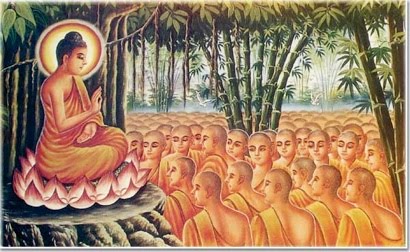
Biggest lie about Lord Buddha in some Chinese temples

Step into a Chinese temple are you'll probably see Lord Buddha depicted as a fair-skinned man with Chinese-like features.  Siddhartha Gautama was born in Lumbini in present-day Nepal and more probably resembled a typical Nepali man.


What's wrong with depicting The Enlightened One in the way he really looked like?

/end


Monday, March 29, 2021

“Tomorrow, March 31, is Guanyin’s birthday,” reminds Mummy Lulu. “Do the necessary to seek blessings from the Goddess!”


Mummy Lulu wags a finger in my face. “Ewe, don’t forget that tomorrow, March 31, is Goddess Guanyin’s birthday. Eat vegetarian meals, burn offerings and pray, either at home or in a temple. If possible, release birds or tortoises.”


I gulp a mouthful of Caffee Latte and release a slow hearty exhale. “Why are disciples of Guanyin not allowed to eat beef?” I ask, savouring a roasted aroma skimming up my nostrils

“According to legend, Guanyin’s wicked mortal father – Emperor Zhuang -- was re-incarnated as a cow!” Mummy Lulu crimps her brows. “That’s the punishment for being an evil person!”       


/end


Thursday, March 4, 2021

Legend of Goddess Guanyin, according to Sifu Sabrina


[Source: inkdancechinesepaintings.com]

Goddess Guanyin's birthdays falls on 31st March, 2021 or the 19th day of the 2nd Chinese lunar month. 


Please check out the YouTube link below to see what Sifu Sabrina says about the history of this goddess:

https://www.youtube.com/watch?v=o-FCN3ESu0s

/end

Monday, December 12, 2016

Man sells himself to bury father!


During the Han Dynasty, a poor farmer named Dong Yong offered to sell himself as a slave to a rich merchant because he could not afford a coffin for his father who had died.  The merchant agreed and bought a coffin for Dong Yong to bury his father. Thereafter, Dong Yong  went to work for the merchant. One day, a pretty maiden appeared at the merchant's mansion and offered to weave 30 rolls of silk in five days in return for the freedom of Dong Yong. The merchant's jaw dropped when he saw the sex-bomb maiden (pix below) and agreed. Once the silk was delivered, he freed Dong Yong from his slavery. Did Dong Yong marry the girl?


Nay, the maiden transformed into her true self. She was a goddess! Moved by Dong Yong's act of filial piety, she had decided to help him. Before Dong Yong could say thank you, she started to float to heaven! And the merchant got down on his knees to pray for forgiveness for harbouring dirty thoughts about the erstwhile sex kitten!


If you want to read more tales of filial piety, go to the Choo Sing Tong Temple which is dedicated to the God of War. On one wall are written several such stories alongside relief carvings.  Opposite the temple is an economical restaurant which should make your visit to the temple worthwhile. Other points of interest are statues of  the Laughing Buddha, Kuan Yin, the monk Xuan Zang, and the 12 animals of the Chinese zodiac on the bank of the Sungei Batu.


Address:
Choo Sing Tong Temple
Jalan Mangga
Off Jalan Ipoh
Tel: 03-40433608

/end

Saturday, October 8, 2016

A Hindu temple in KL with a peacock pen


Want to see peacocks (aka peafowl) in KL without going to the zoo? Go to Nagara Thandayuthapani Temple at Jalan Ipoh (Opposite Madras Hotel) which has a peacock pen.  Eight birds live there. Peacocks with colourful trains (a term for peacock's tail) are males and peahens (female) are less colourful.  Peafowl are native to India and Sri Lanka but they are also found in the Congo Basin and  Indo-China.


/end

Saturday, July 30, 2011

Kek Lok Si Temple’s Rev. Seck Jit Heng is not fit to be a monk


[Pix courtesy of nst.com.my]

All Buddhist monks have taken a vow not to seek personal gain, fame and wealth. Rev. Seck Jit Heng, abbot of Kek Lok Si temple, who was conferred the Darjah Gemilang Pangkuan Negeri by the Yang di-Pertua Negri has obviously not cultivated detachment from the layperson’s desire for awards and fame. Rev. Seck, you have defiled the image of Buddhism and monkhood by accepting the award. You are not fit to be a monk.

Monks like you inspire film producers to depict wayward monks as hum sup [lecherous] and evil in their movies. According to thaiworldview.org., in Thailand, some monks have even decided to live in the forest to be far away from human beings. The website also stated: “Such monks don't want to interact anymore with the problems of everyday life of laymen and women or don't want to interact with those monks who seek only fame and awards from the public or don't strictly follow the 227 Buddhist rules.”

/end

Monday, November 30, 2009

"Saudara Baru" a misnomer


When Chinese in Malaysia embrace Islam, they are referred to as "Saudara Baru" by their Malay brethren and sisters. "Saudara Baru" means "new relations."

Is this an apt term? In the context of history, I doubt it simply because the Chinese in ancient China have been practising the faith more than 600 years earlier than the Malays in the Malay archipelago. In 650, eighteen years after the death of Prophet Muhammad (S.A.W.), his maternal uncle Sa'ad ibn Abi Waqqaas was sent as an offical envoy by the Caliph Uthman ibn Affan of Arabia (currently Saudi Arabia) to the court of Chinese Emperor Gaozong of the Tang Dynasty. So important was this visit that the Hui people of China regard the year 650 as the founding of Islam in their country. Impressed with the teachings of Islam, the Emperor built the magnificent Memorial Mosque in Canton city.

On the other hand, Malaysia's Batu Bersurat (or Terengganu Stone) that was discovered in 1899 revealed that an Islamic state existed in the area before 1326. A theory was thus postulated that Islam had arrived to the East Coast of the Malay peninsula from China. On the West Coast, Islam began to spread its wings only after Parameswara, a Hindu prince from Sumatra, converted to Islam in 1409. In days of yore, prior to the founding of Melaka, the Malays were under the influence of the Hindu-Buddhist empires of Majapahit (1229-1500) and Sri Vijaya (680-1200/1300), both based in Java, and were probably idol-worshippers.

Thus, doesn't it seem right that the Chinese Muslims in China should refer to the Malays in Malaysia as "Saudara Baru"?

/end